Department of
Technology & Vocational Education
Explore this section
Welcome to Department of Technology & Vocational Education
The 21st century was distinguished from humanity’s previous history by the unprecedented progress in the teaching of Technology and Vocational Education. Within the context of sustainable development, it is now recognized that no modern society is imaginable without the support of teaching Technology and Vocational Education, and most countries place high value on Technology and Vocational Education as a means towards development of saleable skills for industrial, economic, and technological development.
Technology and Vocational Education is very important to the development of any nation that is why every nation must take it very serious in all institutions of learning. Many of the developed worlds were able to achieve so much in Technology because Technology and Vocational Education programme that produces skilled manpower and technology teachers that teach technology and vocational subjects in their schools. T
he Department of Technology and Vocational Education has a mission to prepare teachers who can compete favourably anywhere in the world. It is its mission to produce competent, creative, and constructive teachers who can resourcefully explore Nigerian’s environment to teach the students technology. In this Department, therefore the university has provided all that is needed to achieve this. There are competent professionals, well equipped laboratories, and workshops for you to unveil your potentials.
Once again, you are welcome to a department that can shape your perception of life and society for trust peace and sustainability.
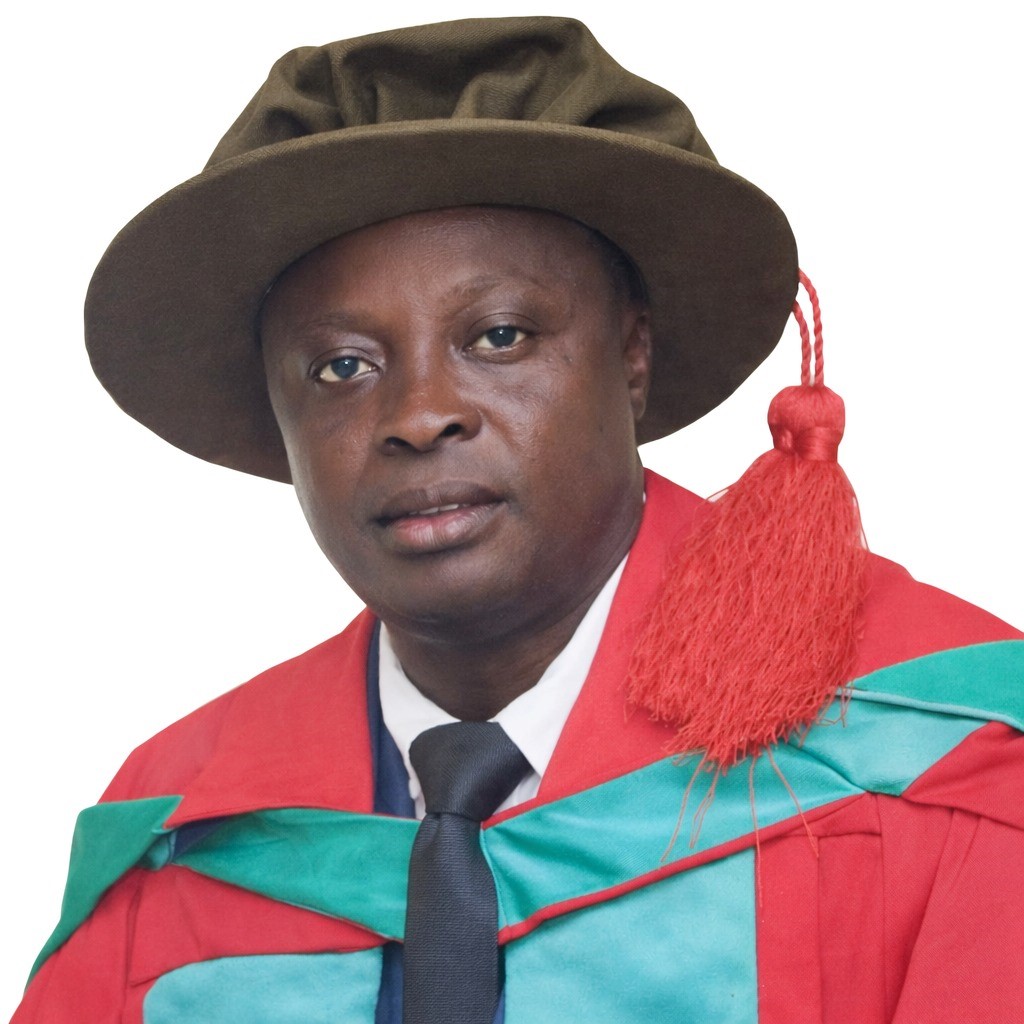
Prof. Jimoh Adebayo JELILI
Head of Department (HOD)
Objectives of the Department
- The department is deemed to have a global impact as it aims at attracting students and other individuals from other departments and equipping them with relevant skills and knowledge for self-reliance and for entrepreneurship purposes.
- Develop a department of repute for the training of graduate and postgraduate students that are employable, enterprising, and self-reliant.
- To Empower students with design and research skills capable and efficient in teaching, training, and research Prepare students with appropriate techniques to solve technology and vocational education problems via Technological innovations.
- To produce Technology and Vocational Teachers who are highly motivated, conscientious, capable, and efficient in teaching, training and research in the Secondary Schools, Higher Institutions and Research Institutes.
- To develop professional teachers for more competence on their jobs and capable of developing the spirit of inquiry and creativity in Technology and Vocational Education at various levels of basic and Post Basic educational institutions.
- To make accessible human services and products for continual improvement of Technology and Vocational Education in the Nigerian Education System.
- To produce teachers who can promote public understanding of Technology and Vocational Education and can fit into social life changes of the community and the world at large.
- To promote public understanding of Technology and Vocational Education among the youths and produce teachers nation-wide for our sustenance.
- To prepare students for post-graduate work of study in the field of Technology Education. University of Lagos, on the order hand is to achieve excellence in Teacher Education. It is in pursuance to these missions, and in response to the yearning.
History of the Department
The Faculty of Education was established in the University of Lagos in 1964, two years after the University itself was founded. In accordance with the report of the Advisory Commission of UNESCO which prepared the initial plans for the University of Lagos, the original Faculty of Education was merged in 1967 with the Federal Advanced Teachers’ College which had been opened on a site of the University with financial and manpower support from the United State Agency for International Development (USAID).
As a result of the merger, a College of Education was established in line with the general collegiate structure of the University at the time. Both professional education disciplines and content teaching subjects were taught within the College for the National Certificate of Education and Bachelor of Arts and Sciences (Education) Degrees. At the beginning of the 1975/76 session, the College of Education was restructured into the Faculty of Education.
The faculty started with the following Departments:
- Adult Education
- Curriculum Studies
- Educational Foundations
- Educational Administration
- Human Kinetic and Health Education
In the Department of Curriculum Studies, Arts, Science and Social science teachers are prepared. The following headed the Department of Curriculum Studies at various periods, namely Professor S. A. Adejumobi, Professor A. O. Osiyale, Professor A. O. Kalejaiye, Professor M. Odusina, Professor D. O. Olumuyiwa, Professor T. O Odunusi, Professor K. A. Adegoke, Professor Durojaiye Ajeyalemi and Professor Olufunke Lawal.
To engender efficiency and effectiveness, the Department of Curriculum Studies was structured into three academic units in 1993. They were:
- Humanities Education Unit (Education/English, Education/History, Education/French, Education/Yoruba, Education/Igbo, Education/Music)
- Religious Studies Education Unit (Education/Christian Religious Studies and Education/Islamic Religious Studies).
- Science Education Unit (Education/Chemistry, Education/Biology, Education/Mathematics, Education/Physics, Education/geography).
This Unit was headed by various times by Professor T. D Baiyelo, Dr. O. O. Busari, Dr. A. O. Ogunleye, Prof. H. N. Odogwu, and Dr. E. C. Nna. In 2004, the three units metamorphosed into two approved Departments. Department of Art and Social Sciences Education and Department of Science and Technology Education.
Three new programmes were approved by the University, namely,
- Education/ Home Economics
- Education/Integrated Science
- Technology Education.
Overall, the following programmes are domiciled within the Department:
- Education/Biology
- Education/Chemistry
- Education/Mathematics
- Education/Physics
- Education/Integrated Science
- Education/Home Economics
- Technology Education
The pioneering Head of Science and Technology Education Department was Professor T. D. Baiyelo while the pioneering Secretary was Mr. S. Okolo. In 2004, the Department employed more academic and non-academic staff and absorbed the Centre for Educational Technology which has since been used to enhance teaching in the faculty. Since its inception in 2004, the Department has been headed by the following:
- 2004-2005 Professor T. D. Baiyelo
- 2005 Professor Temi Busari
- 2005-2006 Dr. Helen N. Odogwu
- 2006-2007 Dr. Helen N. Odogwu
- 2007-2009 Dr. E. C. Nna
- 2009-2011 Dr. Uchenna Udeani
- 2011-2012 Dr. Helen N. Odogwu
- 2012-2014 Dr. G. Esiobu
- 2014-2015 Dr. Ayo Ogunleye
- 2015- 2018 Professor H. N. Odogwu
- 2018- 2021 Professor G. Esiobu
- 2021- date Professor S. A. Adeyemo
In 2021, Department of Science and Technology Education and Arts and Social Sciences were divided into four approved Departments. Departments of Art Education, Science Education Social Sciences Education and Department of Technology and Vocational Education. The Department of Technology and Vocational Education was finally approved by the senate of the University of Lagos on 28th July 2021. Consequently, the first Ag. HOD appointed was Dr. Oladiran Stephen OLABIYI on 25th April 2022.
The Department offers the following courses: Home Economics Education, Business Education, and Technology Education. Technology Education options include Automobile/Metalwork, Building/Woodwork, and Electrical/Electronics, for the award of B.Sc. Ed in Technology Education, Home Economics, and Business Education. Technology Education is now a unit of the Department of Technology and Vocational Education which houses Technology Education, Business Education, and Home Economics Education since the year 2022.
Programmes
Take a significant step in your career journey by investing in your professional development through our faculty’s specialized certificate programs, designed to provide you with in-depth knowledge and practical skills in a focused area of study.
Undergraduate Programmes
Postgraduate Programmes
Student Opportunities
Discover the exciting opportunities awaiting students within this department. Here, you can explore pathways for intellectual growth, engage in stimulating learning experiences, and lay the foundation for future academic and professional success in a specific field of study.